

What Does a Well-Structured Digital Infrastructure Look Like in a Business?

As businesses grow, complexity increases. More customers, more data, more employees, and more processes create a level of coordination that is difficult to manage without structure.
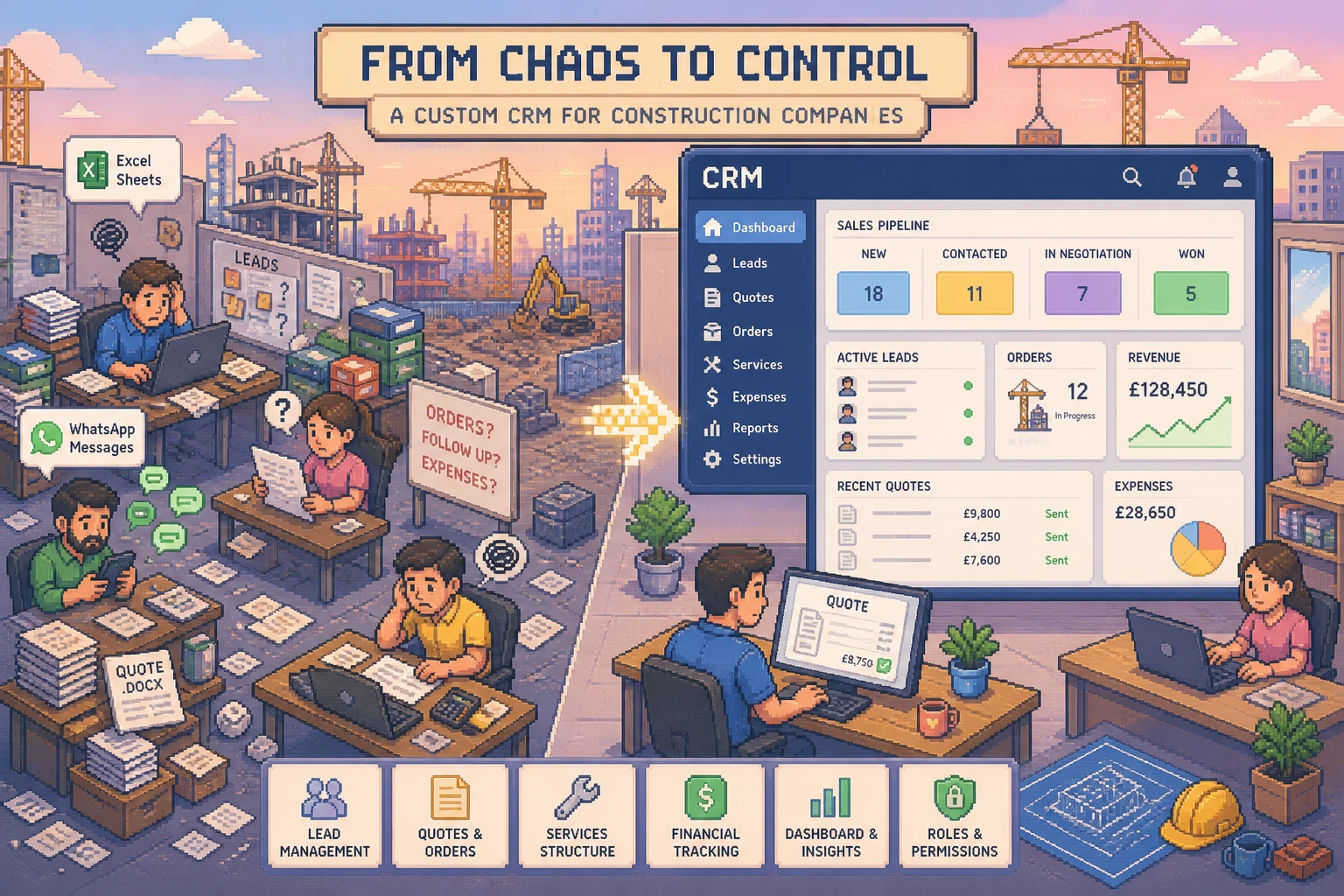
At first, companies rely on simple tools—spreadsheets, messaging apps, and standalone software solutions. But over time, these tools start to create friction instead of solving problems.
This is where digital infrastructure becomes critical.
A well-structured digital infrastructure is not just a collection of tools. It is a connected system that supports the entire operation of a business.
The Difference Between Tools and Infrastructure
Many companies confuse having multiple tools with having a system.
Using a CRM, accounting software, and project management tool does not automatically mean your business is well-structured. If these tools are not connected, they create silos.
Employees re-enter the same data multiple times. Reports are inconsistent. Communication breaks down.
A true digital infrastructure ensures that:
-
information flows automatically
-
systems communicate with each other
-
processes are standardized
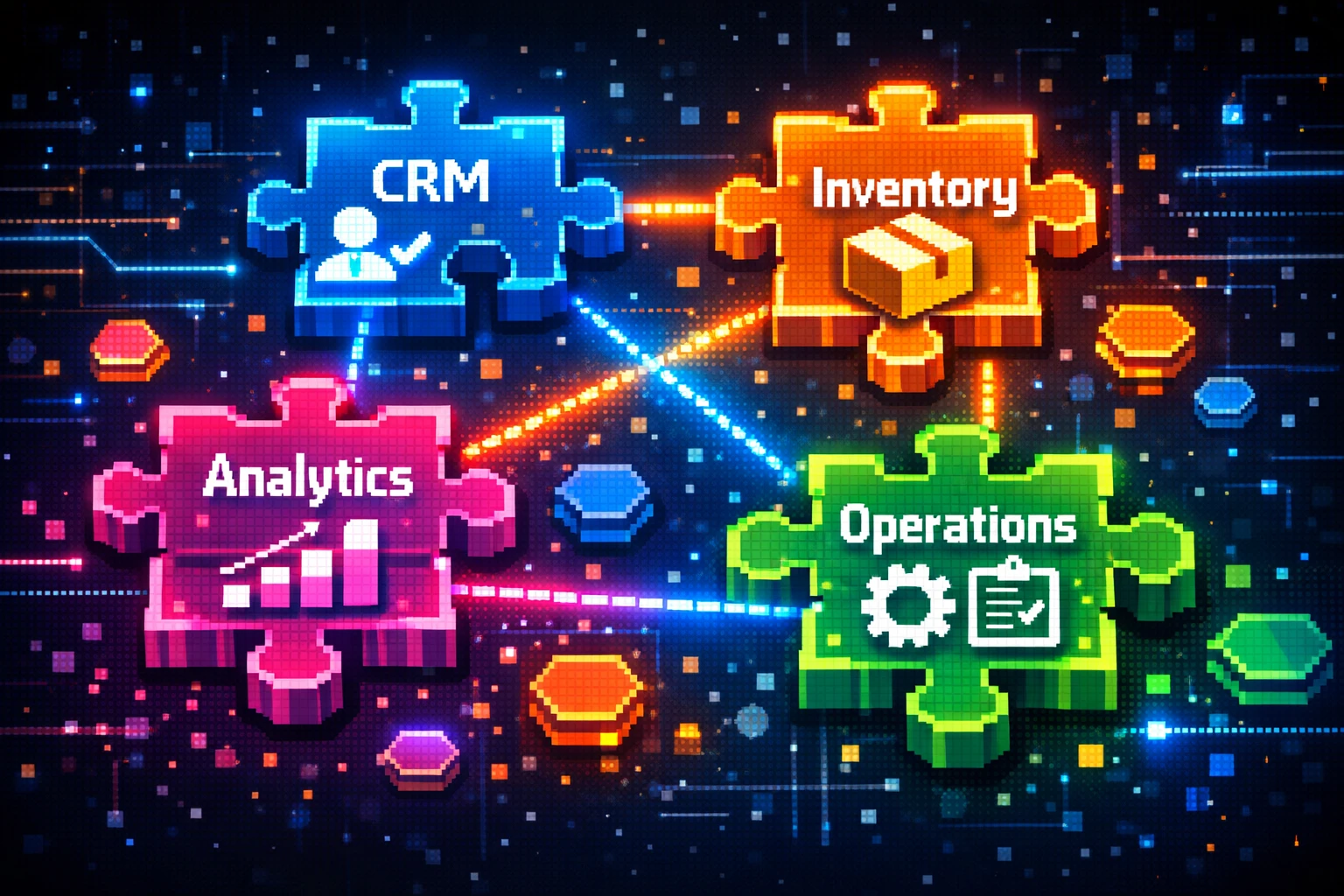
It transforms separate tools into a unified environment.
Core Layers of a Digital Infrastructure
A well-built digital infrastructure usually consists of several layers that work together.
1. Customer Layer
This includes systems that manage customer relationships and interactions.
It tracks leads, communication history, sales activity, and customer data. It is often the entry point for many business processes.
2. Operations Layer
This layer handles internal workflows.
It includes task management, project tracking, approvals, and team coordination. It ensures that work is structured and progress is visible.
3. Financial Layer
This part manages transactions, invoicing, expenses, and financial reporting.
It connects business activity to revenue and cost tracking.
4. Data & Analytics Layer
This is where all data comes together.
Dashboards and reports provide insights into performance, helping leaders make informed decisions.
Integration: The Backbone of the System
The most important element of digital infrastructure is integration.
Systems must communicate with each other.
For example:
-
A new customer in the CRM should automatically appear in operations
-
A completed project should trigger invoicing
-
Payments should update financial dashboards
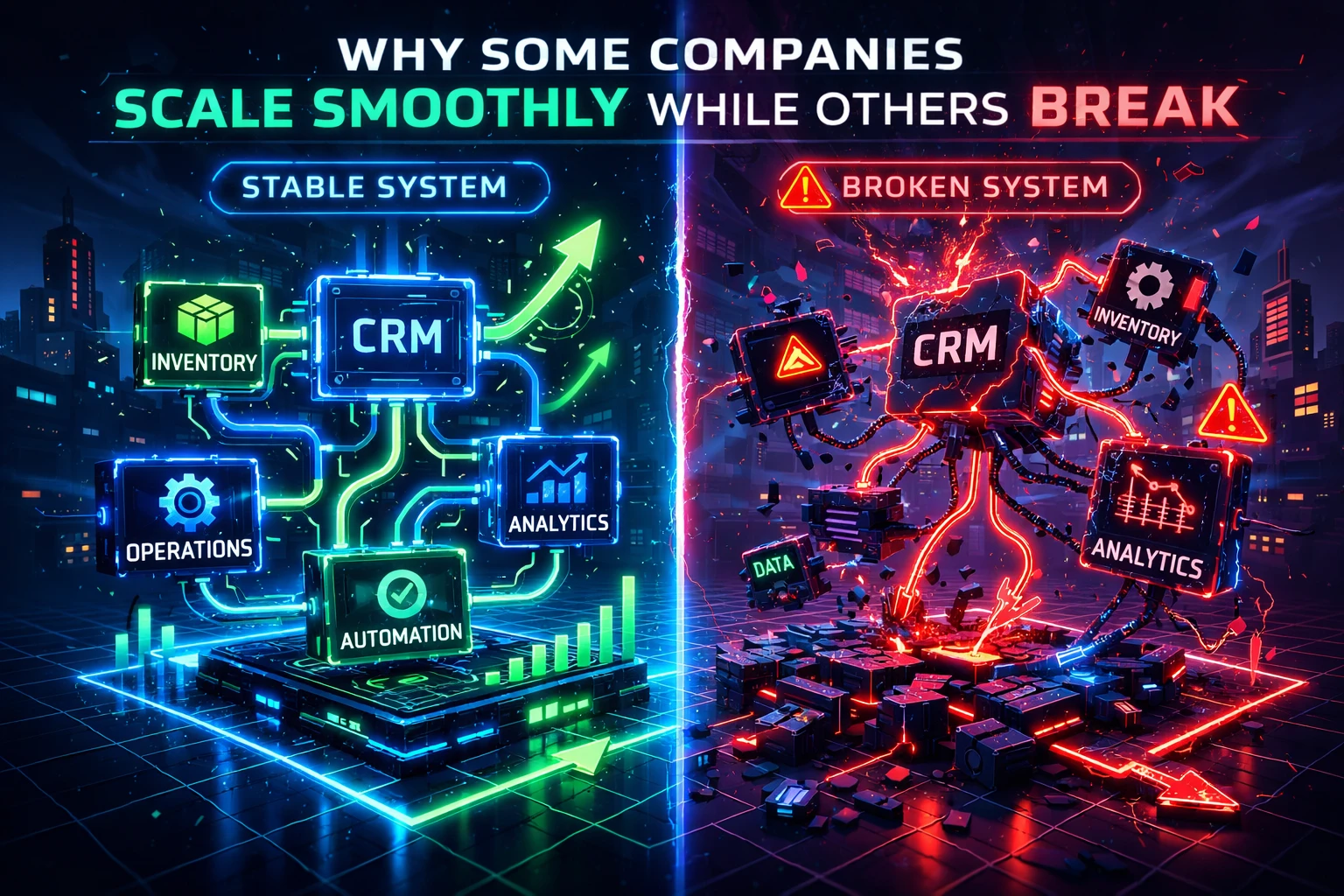
Without integration, companies fall back into manual work.
With integration, workflows become seamless.
Centralization vs Fragmentation
In poorly structured businesses, data is scattered.
Different teams use different tools. Information is duplicated or inconsistent. Decisions are made based on incomplete data.
In a well-structured infrastructure:
-
data is centralized or synchronized
-
everyone works with the same information
-
there is a single source of truth
This drastically improves clarity and control.
Automation: Reducing Manual Work
Automation is what turns infrastructure into a powerful system.
Repetitive tasks—such as notifications, updates, approvals, and reporting—can run automatically.
This reduces human error and frees up time for more valuable work.
Automation ensures that processes are not dependent on individuals.
Scalability: Built for Growth
A strong digital infrastructure is designed to scale.
As the business grows, systems can handle more data, more users, and more complex workflows without breaking.
Without scalability, companies eventually hit operational limits.
Customization: Adapting to the Business
No two businesses operate exactly the same way.
That is why many companies eventually move toward custom solutions or tailored systems.
Instead of forcing workflows into generic tools, they build systems that reflect how they actually operate.
This creates a better fit between technology and business logic.
What It Looks Like in Practice
In a well-structured company:
-
teams don’t chase information—it is accessible
-
processes are clear and repeatable
-
systems handle routine tasks automatically
-
management has real-time visibility into operations
From the outside, everything looks smooth.
Behind the scenes, a well-designed digital infrastructure is doing the heavy lifting.
Conclusion
A well-structured digital infrastructure is not about having more tools. It is about building a system where everything works together.
It connects data, automates workflows, and creates clarity across the organization.
Companies that invest in proper infrastructure are not just more efficient—they are more scalable, more controlled, and better prepared for growth.