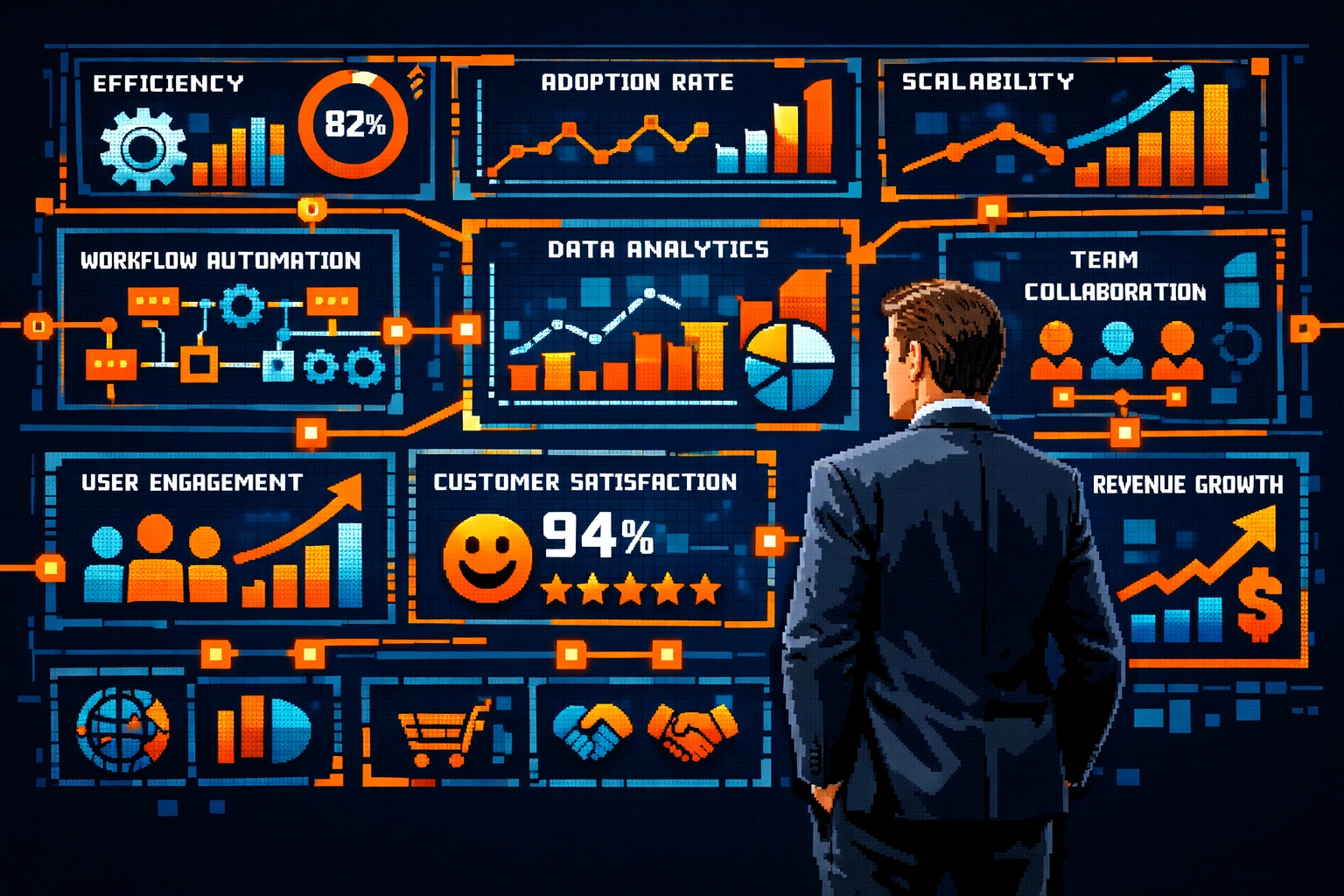


Data-Driven Decision-Making: Why It Outperforms Intuition in Modern Business

In today’s competitive landscape, businesses no longer win by doing “what feels right.” Markets shift quickly, customer expectations evolve, and competition grows smarter every year.
This is why data-driven decision-making has become a core pillar of successful companies — while intuition, though valuable, can no longer stand alone.
But what exactly makes data-driven decisions superior to intuition? And how can businesses adopt this mindset effectively?
Let’s break it down.
1. Intuition Is Subjective — Data Is Objective
Intuition is shaped by personal experience, emotion, and past events.
Data, on the other hand, is consistent, measurable, and free from bias.
Intuition:
-
Varies from person to person
-
Easily influenced by stress or assumptions
-
Often relies on incomplete information
Data:
-
Reflects actual customer behavior
-
Highlights patterns and trends
-
Gives a factual foundation for decisions
Result: Data removes guesswork and gives your team a shared, objective truth.
2. Data Identifies Problems Before They Become Visible
Humans notice issues late — data detects them early.
For example:
-
A slight drop in lead quality
-
A slow page on your website reducing conversions
-
A sales agent missing follow-ups
-
A marketing channel with rising costs but dropping results
These issues don’t “feel” wrong at first. But dashboards and analytics expose them in real time.
This allows businesses to react quickly instead of waiting for damage to show up.
3. Data Shows What Actually Works
Intuition often tells us what should work.
Data shows what does work.
Examples:
-
You think Instagram brings the most leads → data shows WhatsApp does
-
You think top agents close the most deals → data shows mid-level agents with better follow-up rates outperform them
-
You think customers want Feature A → usage data shows they prefer Feature B
Data cuts through assumptions and highlights the true drivers of revenue.
4. Data Enables Predictive Insights, Not Just Reactive Ones
Intuition focuses on what is happening now.
Data predicts what will happen next.
Modern systems use:
-
Trend analysis
-
Forecasting
-
Historical performance
-
Lead scoring
-
Customer behavior patterns
This helps companies plan inventory, ad budgets, staffing, sales strategies, and growth targets with confidence.
Data empowers businesses to be proactive, not reactive.
5. Data Strengthens Collaboration and Reduces Internal Conflict
Teams often disagree when decisions rely on opinion.
Data aligns everyone around clear, shared facts.
With unified dashboards and KPIs:
-
Marketing knows which channels drive ROI
-
Sales knows which leads convert
-
Management sees team performance
-
Operations understand workload trends
This transparency builds trust and eliminates “gut-feeling arguments.”
6. Data-Driven Companies Outperform Their Competitors
Countless studies show that companies using strong data strategies achieve:
-
Higher revenue growth
-
Faster decision cycles
-
Better customer retention
-
Reduced operational costs
-
More accurate forecasting
Data-driven organizations adapt faster — and in today’s world, speed is everything.
7. Intuition Still Matters — but Only When Supported by Data
This isn’t a battle of intuition vs. data.
The truth is:
The best decisions combine experience with reliable information.
Intuition helps interpret data.
Data helps validate intuition.
When both work together, decisions become smarter, faster, and more impactful.
How Your Business Can Become Data-Driven
To shift toward a data-powered culture, companies need:
✔ A centralized CRM or ERP
To collect and organize data from all channels.
✔ Dashboards & real-time analytics
To visualize KPIs, detect issues, and measure performance.
✔ Automated data flows
To eliminate manual work and human error.
✔ A culture of measurement
Where decisions start with numbers, not assumptions.
Conclusion
In the modern business world, intuition alone is no longer enough.
Data-driven decision-making enables clarity, accuracy, speed, and long-term growth.
Companies that rely on structured data outperform those that rely on guesswork — every single time.
When your business uses data correctly, you can:
-
Understand your customers
-
Optimize your processes
-
Predict outcomes
-
Make confident decisions
-
And scale faster than ever
The future belongs to businesses that use their data — not ignore it.